Sleep Apnoea & Snoring Treatment in Bondi Junction - Oral Appliance Therapy Explained
Snoring is one of those problems people live with for years before they mention it to anyone, and usually it is a partner who raises it first.
Sometimes it is harmless. Sometimes it is a sign of something worth taking seriously. As a dentist, I am not the person who diagnoses sleep apnoea, but I am often part of the team that helps treat it, because some patients are well suited to a custom oral appliance made by a dentist rather than a CPAP machine.
The first thing I usually explain is this: snoring and sleep apnoea are not the same thing, and the right treatment depends on a proper diagnosis, not a guess.
At Dentist In The Park in Bondi Junction, we provide oral appliance therapy for snoring and mild to moderate sleep apnoea for suitable patients, including some people who cannot tolerate CPAP. This article explains what that involves, who it suits, and when you need a medical sleep assessment first.
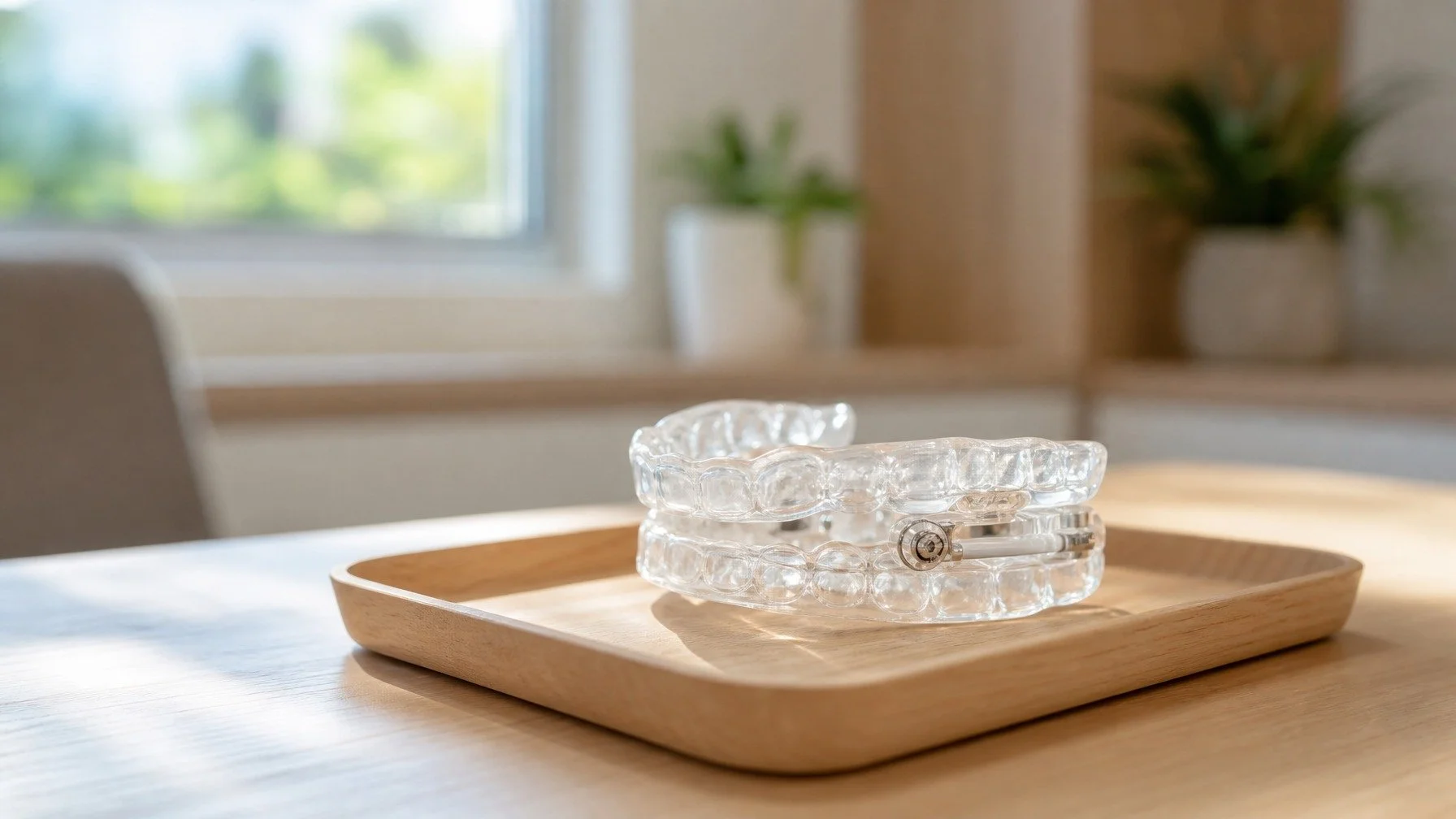
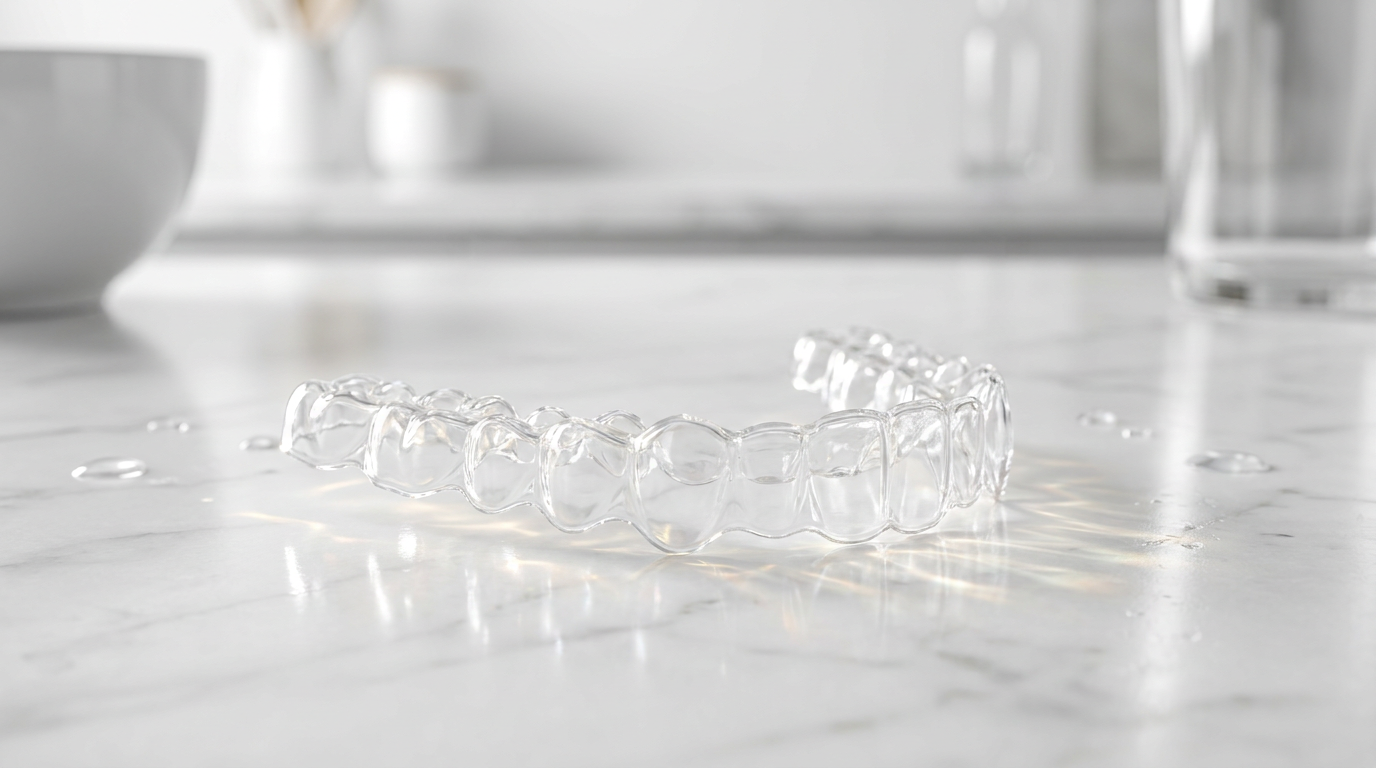
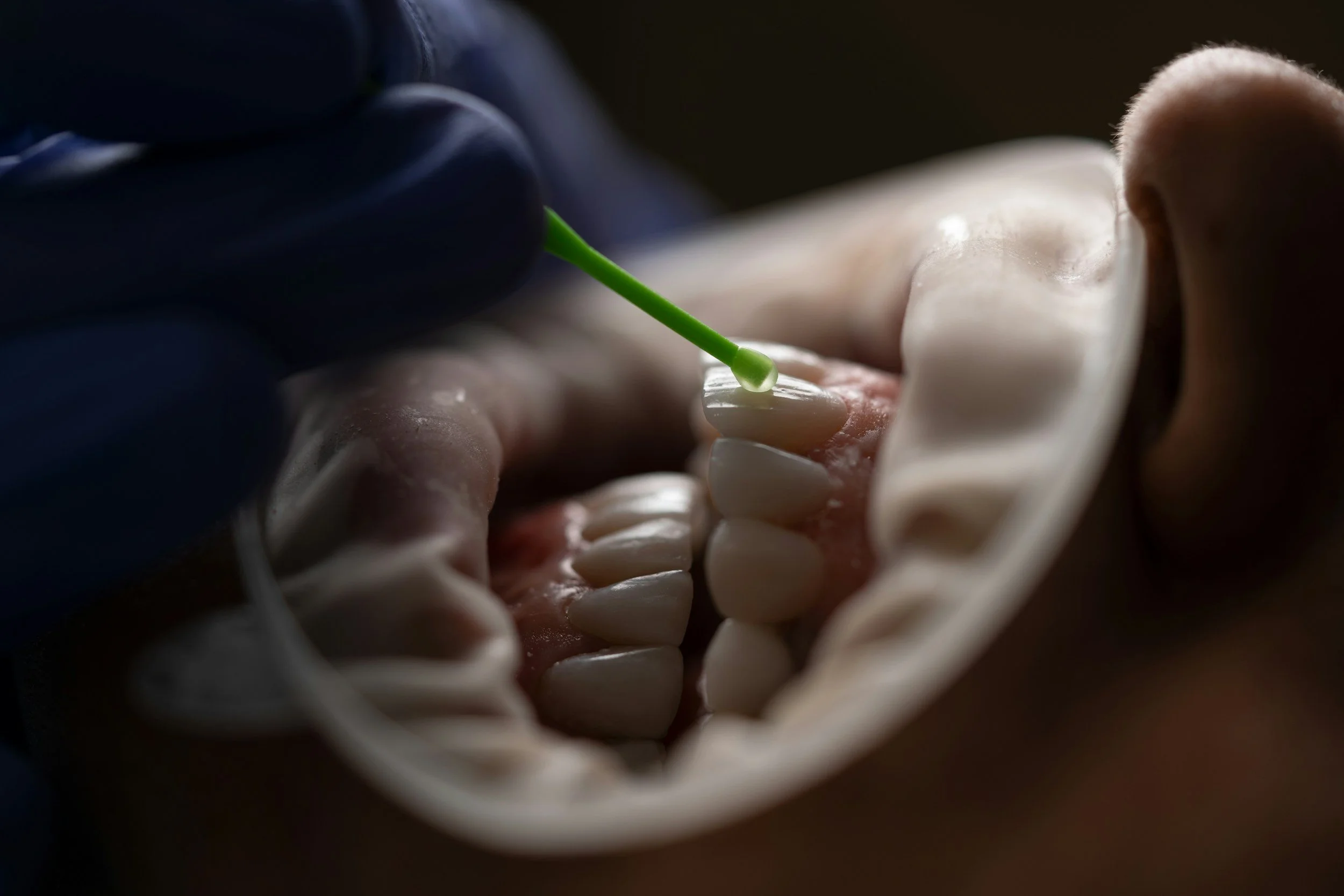
Custom dental oral appliance for snoring and sleep apnoea on a tray in a Bondi Junction practice
Short answer: how do dentists treat snoring and sleep apnoea?
Dentists treat snoring and mild to moderate obstructive sleep apnoea with a custom oral appliance, usually a mandibular advancement device, that holds the lower jaw slightly forward during sleep to help keep the airway open. It is a comfortable option for many people, especially those who cannot tolerate CPAP. It is not a substitute for a medical diagnosis. Moderate to severe sleep apnoea is a medical condition, and the right path often starts with a sleep study arranged through your GP or a sleep physician.
Snoring versus sleep apnoea
Snoring is the sound of air moving past soft tissues that vibrate as you breathe during sleep. Plenty of people snore and have no underlying medical problem.
Obstructive sleep apnoea (OSA) is different. It is a condition where the airway repeatedly narrows or closes during sleep, briefly interrupting breathing. The Sleep Health Foundation explains that obstructive sleep apnoea is common and that it causes the throat to narrow or close during sleep, disturbing sleep and reducing oxygen levels.
The reason the distinction matters is that simple snoring is mostly a social and quality-of-life issue, while untreated sleep apnoea is a health issue. Healthdirect notes that untreated obstructive sleep apnoea is associated with daytime sleepiness and has links to conditions such as high blood pressure, so it should be assessed properly rather than ignored.
Signs worth taking seriously
You cannot diagnose sleep apnoea from symptoms alone, but some signs make a medical assessment sensible. Common ones include:
Loud, habitual snoring
A partner noticing you stop breathing, gasp or choke during sleep
Waking unrefreshed despite a full night in bed
Daytime sleepiness, poor concentration or irritability
Morning headaches or a dry mouth on waking
If several of these sound familiar, the next step is a conversation with your GP, not a dental appliance bought online.
Why diagnosis comes first
This is the part I am most careful about. A dentist should not be the one deciding whether you have sleep apnoea or how severe it is.
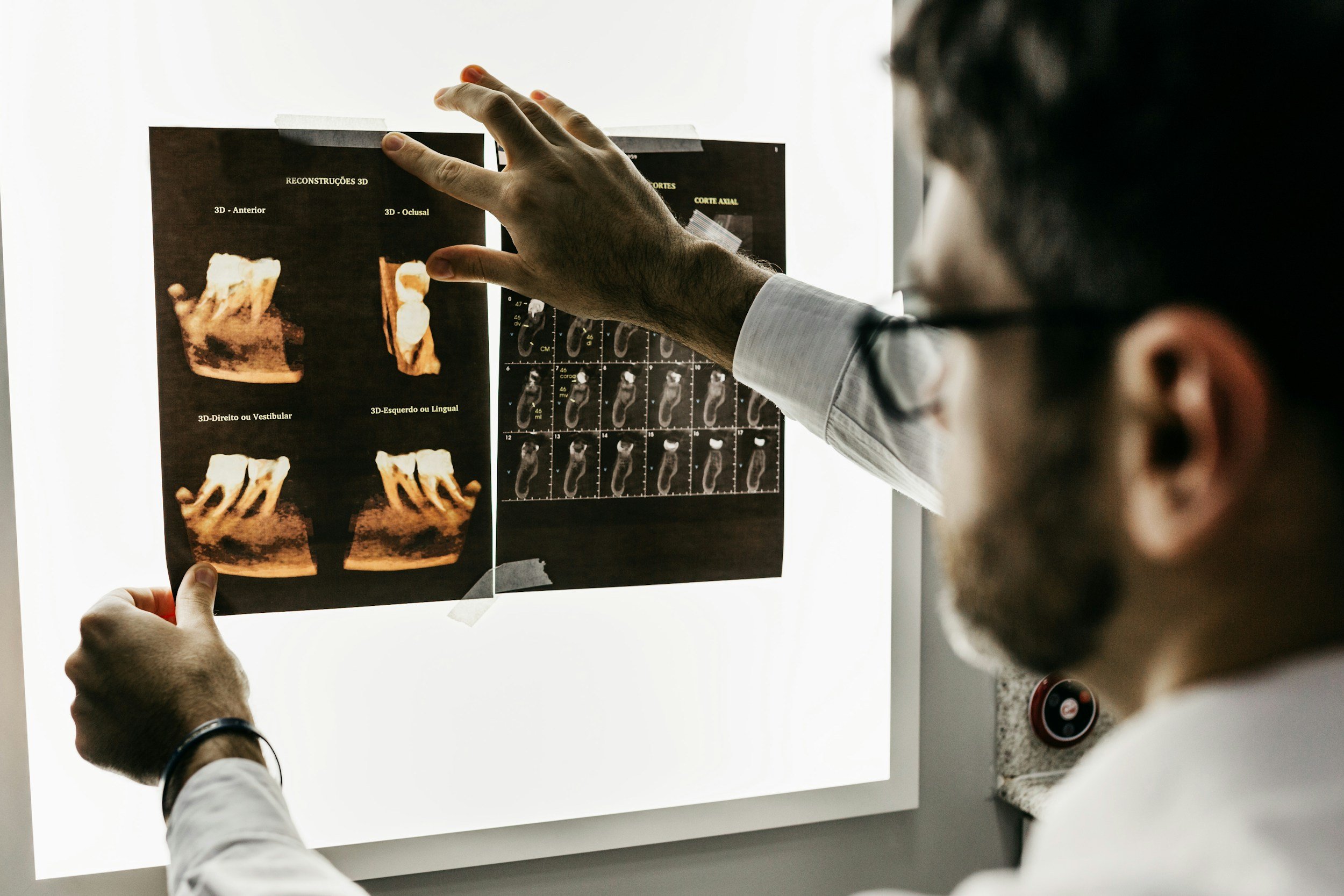
Diagnosis usually involves a sleep study, arranged through your GP or a sleep physician. The study measures what actually happens while you sleep, including breathing interruptions and oxygen levels. That information determines whether your sleep apnoea is mild, moderate or severe, and that severity guides treatment.
Oral appliance therapy is recognised for snoring and for mild to moderate obstructive sleep apnoea, and for some patients with more severe disease who cannot tolerate CPAP. Without a diagnosis, fitting an appliance is treating a symptom while potentially missing a more serious problem. So if you have not been assessed, I will usually suggest seeing your GP first, then we work together from there.
How oral appliance therapy works
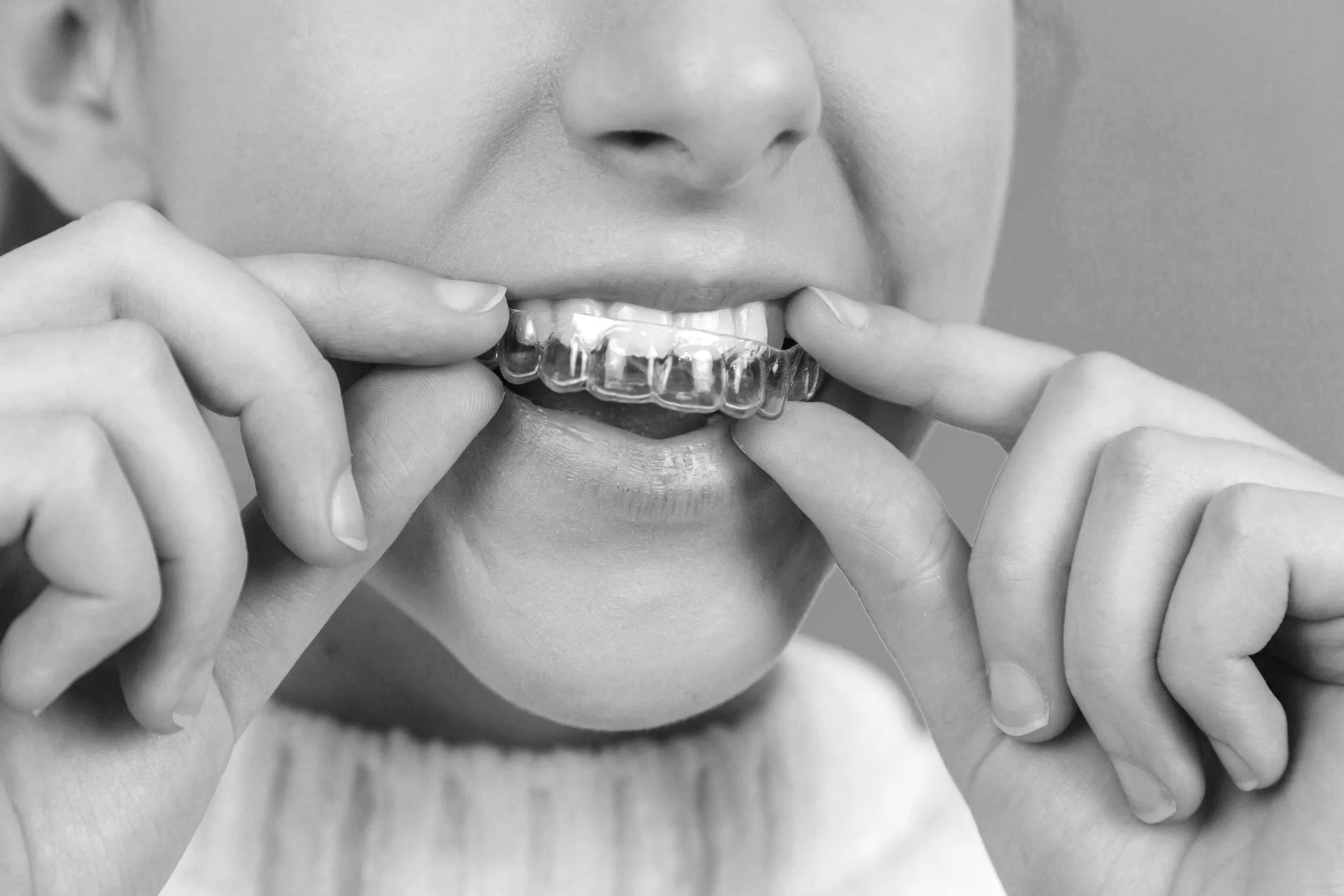
An oral appliance for sleep is a custom device worn in the mouth during sleep. The most common type is a mandibular advancement device, which holds the lower jaw slightly forward.
By bringing the lower jaw and tongue forward a little, the appliance helps keep the airway more open, which can reduce snoring and the number of breathing interruptions in suitable patients. A dentist-made appliance is custom fitted to your teeth and adjusted over time for comfort and effect.
At our Bondi Junction practice, oral appliance therapy is part of our general and restorative care. We assess your teeth, gums, bite and jaw joints before recommending an appliance, because the device rests on your teeth and works your jaw, and not everyone is a suitable candidate.
CPAP and oral appliances - not a competition
Patients sometimes arrive expecting me to argue that an oral appliance is better than CPAP. I do not, because they are different tools for different situations.
CPAP, which gently pushes air through a mask to keep the airway open, is a highly effective treatment, particularly for moderate to severe sleep apnoea. The challenge is that some people find it difficult to tolerate night after night.
The Sleep Health Foundation notes that oral appliances are an option for snoring and for mild to moderate obstructive sleep apnoea, and can be considered for people with more severe sleep apnoea who cannot tolerate CPAP. The best option depends on your diagnosis, the severity of your sleep apnoea, and what you can realistically use every night. The most effective treatment is the one you will actually wear.
Who may be suitable for a dental sleep appliance?
Oral appliance therapy may be suitable if:
You have been assessed and have simple snoring or mild to moderate obstructive sleep apnoea
You have moderate to severe sleep apnoea but cannot tolerate CPAP, with appropriate medical input
You have enough healthy teeth to support and retain the appliance
Your gums and jaw joints are healthy enough for an appliance
You are willing to wear it consistently and attend reviews
It may be less suitable, or need extra care, if:
You have severe sleep apnoea that needs medical-led treatment
You have significant gum disease, loose teeth or too few teeth to hold an appliance
You have painful or unstable jaw joints
You have not yet had a sleep assessment
These are general points, not a diagnosis. Suitability is always decided after an examination and in light of your medical sleep assessment.
What to expect at the practice
If oral appliance therapy is appropriate for you, the process generally involves an assessment of your teeth, gums, bite and jaw joints, digital scans or impressions to make a custom device, fitting and adjustment for comfort, and reviews to check how you are responding. We also keep in contact with your GP or sleep physician where relevant.
Comfort matters here. An appliance only helps if you can wear it through the night, so we spend time getting the fit and jaw position right rather than rushing it.
My approach to snoring and sleep apnoea
When a patient raises snoring with me, I want to know three things. First, is it just snoring, or are there signs that point to sleep apnoea. Second, have they had a medical sleep assessment, because that changes everything. Third, are their teeth, gums and jaw joints healthy enough to support an appliance comfortably.
From there, we can decide whether an oral appliance is appropriate, whether they should see their GP first, or whether CPAP through a sleep physician is the better path. My job is not to sell a device. It is to help you breathe and sleep better in a way that is safe and suited to you.
Request a Sleep Appliance Assessment in Bondi Junction
If snoring or suspected sleep apnoea is affecting your sleep, the best next step is an assessment of your teeth, gums and bite, alongside a medical sleep diagnosis. I can explain whether a custom oral appliance is suitable for you, how it compares with CPAP for your situation, and how we coordinate with your GP or sleep physician.
If you have not yet had a sleep study, that is usually the first step, and we are happy to guide you on how to arrange one.
FAQs
Can a dentist treat sleep apnoea?
A dentist can provide oral appliance therapy for snoring and for mild to moderate obstructive sleep apnoea, and for some patients with more severe sleep apnoea who cannot tolerate CPAP. A dentist does not diagnose sleep apnoea; that usually requires a sleep study arranged through your GP or a sleep physician.
What is a mandibular advancement device?
It is a custom oral appliance worn during sleep that holds the lower jaw slightly forward to help keep the airway more open. This can reduce snoring and breathing interruptions in suitable patients.
Is an oral appliance better than CPAP?
Neither is universally better. CPAP is very effective, especially for moderate to severe sleep apnoea, but some people cannot tolerate it. The Sleep Health Foundation notes oral appliances suit snoring and mild to moderate sleep apnoea, and can be considered when CPAP cannot be tolerated. The best option depends on your diagnosis and what you can use consistently.
Do I need a sleep study before getting an appliance?
In most cases, yes. A sleep study tells us whether you have sleep apnoea and how severe it is, which determines whether an oral appliance is appropriate. We generally recommend a medical assessment through your GP first.
Will an oral appliance stop my snoring completely?
It can significantly reduce snoring for many suitable patients, but results vary from person to person. Comfort and consistent use are key, which is why a custom-fitted, adjustable appliance usually works better than a generic device.
Is oral appliance therapy uncomfortable?
A custom appliance is fitted to your teeth and adjusted for comfort, so most patients adapt within a few weeks. Some short-term jaw or tooth awareness can occur, which we monitor at reviews.
How do I get started in Bondi Junction?
Book an assessment so we can check your teeth, gums, bite and jaw joints and discuss your sleep history. If you have not had a sleep study, we will guide you on arranging one with your GP or a sleep physician before fitting an appliance.
Which areas does Dentist In The Park service?
We care for patients across Bondi Junction and the Eastern Suburbs of Sydney, including Bondi, Bondi Beach, Waverley, Woollahra, Double Bay, Rose Bay and Vaucluse.
Other helpful articles