Dental Implants in Bondi Junction - Are They Right for You?
When someone loses a tooth, the first concern is often the gap. They may worry about how it looks, how it feels when they chew, or whether other people notice it when they smile.
But from a dental point of view, a missing tooth is not only a cosmetic issue. It can affect chewing, speech, bite balance, neighbouring teeth, and the bone that once supported the tooth.
Dental implants can be an excellent option for replacing missing teeth, but they are not automatically the right choice for everyone. The best decision depends on your gums, bone, bite, medical history, expectations, and willingness to maintain the implant over time.
At Dentist In The Park in Bondi Junction, we discuss implant options including single implants, implant-supported bridges, and All-on-4 for suitable patients. My role is to help you understand the choices clearly before you decide what is right for you.
What is a dental implant?
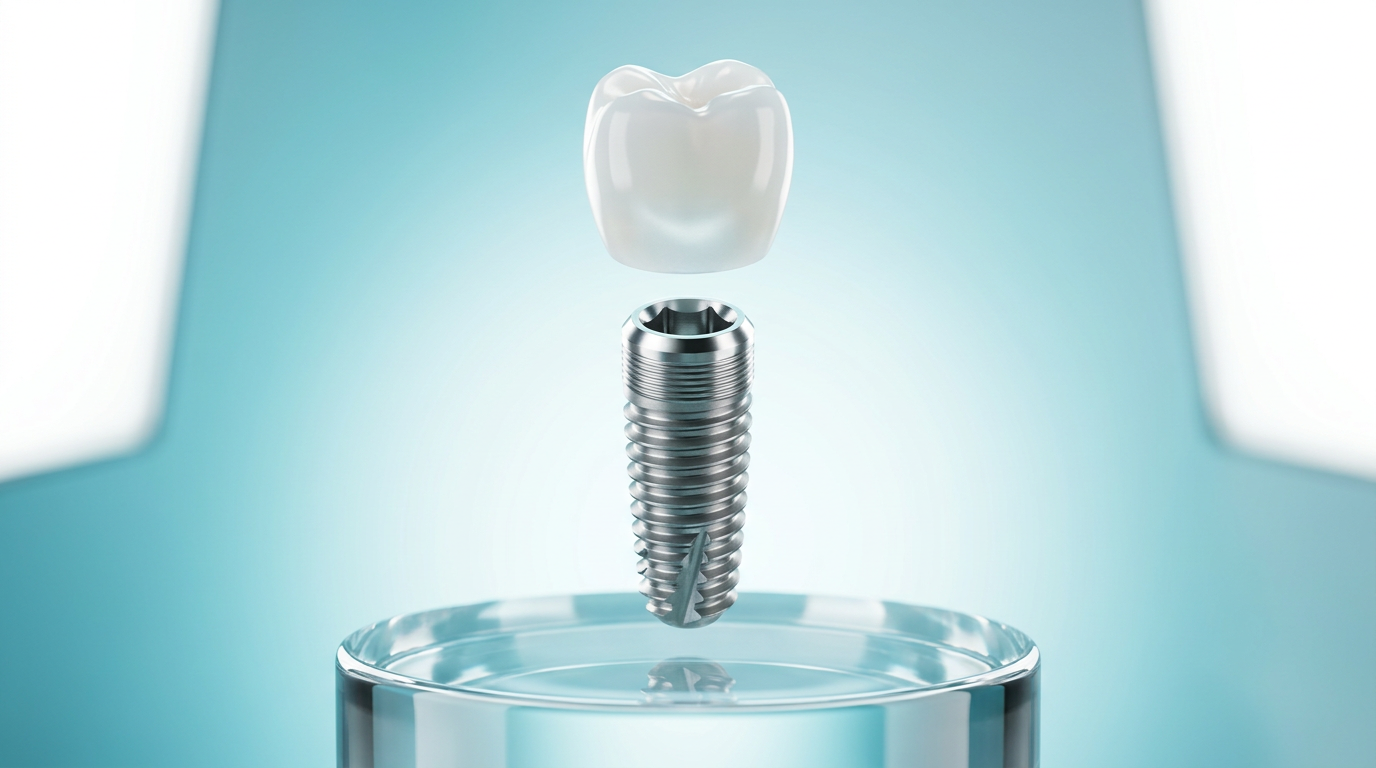
A dental implant is an artificial tooth root, usually shaped like a small metal screw, placed into the jawbone where a tooth is missing. The Australian Dental Association’s oral health site explains that the jawbone grows around the implant screw to hold it securely in place, a process that takes approximately three months.
Once the implant has integrated with the bone, it can support a crown, bridge, or denture-style restoration. Healthdirect describes a dental implant as a metal post or frame surgically positioned into the jawbone to support an artificial tooth.
In plain English, an implant is the foundation. The visible tooth is the crown or prosthesis that attaches to it.
Why people consider dental implants
Patients usually ask about implants for one of three reasons.
They are missing one tooth.
They are missing several teeth.
They are struggling with loose or uncomfortable dentures.
For a single missing tooth, an implant can replace the tooth without cutting down the neighbouring teeth for a conventional bridge. For multiple missing teeth, implants may support a bridge or denture. For a full arch of missing or failing teeth, All-on-4 may be discussed in suitable cases.
The reason implants are so useful is that they are fixed in the mouth. They do not rely on adhesive like conventional dentures, and they do not have to be removed at night in the same way as removable dentures.
That said, fixed does not mean “maintenance-free”. Implants need good daily cleaning and regular professional review.
Who might be suitable for dental implants?
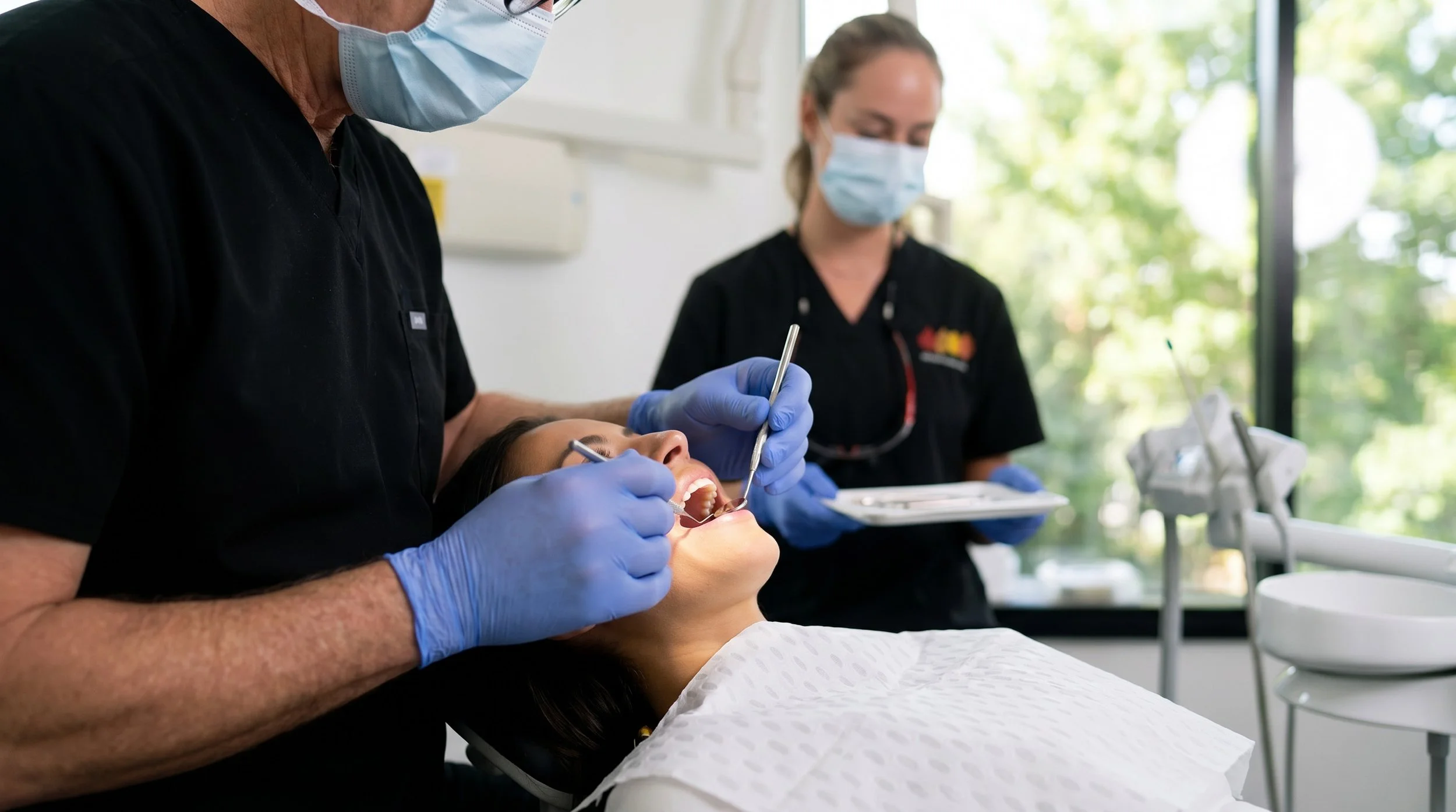
When I assess someone for implants, I am looking at the whole mouth, not just the missing tooth.
A suitable candidate generally needs:
Healthy or well-controlled gums
Enough bone to support the implant, or a plan to address bone loss
A bite that will not overload the implant
Good oral hygiene habits
A medical history that supports normal healing
Realistic expectations about time, cost, maintenance, and risks
This is why imaging and planning matter. It is not enough to simply say, “There is a gap, let’s put an implant there.”
The implant has to be positioned properly, restored properly, and maintained properly.
When implants may not be the first option
Implants are not right for every person or every situation.
They may not be recommended straight away if:
Gum disease is active
There is not enough bone support
Medical conditions affect healing
Smoking or vaping increases risk
Oral hygiene is not stable
The bite is likely to overload the implant
A simpler bridge or denture would be more suitable
Sometimes we need to stabilise gum health first. Sometimes a bone graft needs to be discussed. Sometimes a bridge or denture is the better option for that patient.
Good planning is not about pushing implants. It is about choosing the option that makes sense for the mouth in front of us.
The dental implant process
Implant treatment is usually staged. The details vary from case to case, but the process often includes the following steps.
Step 1 - Assessment and planning
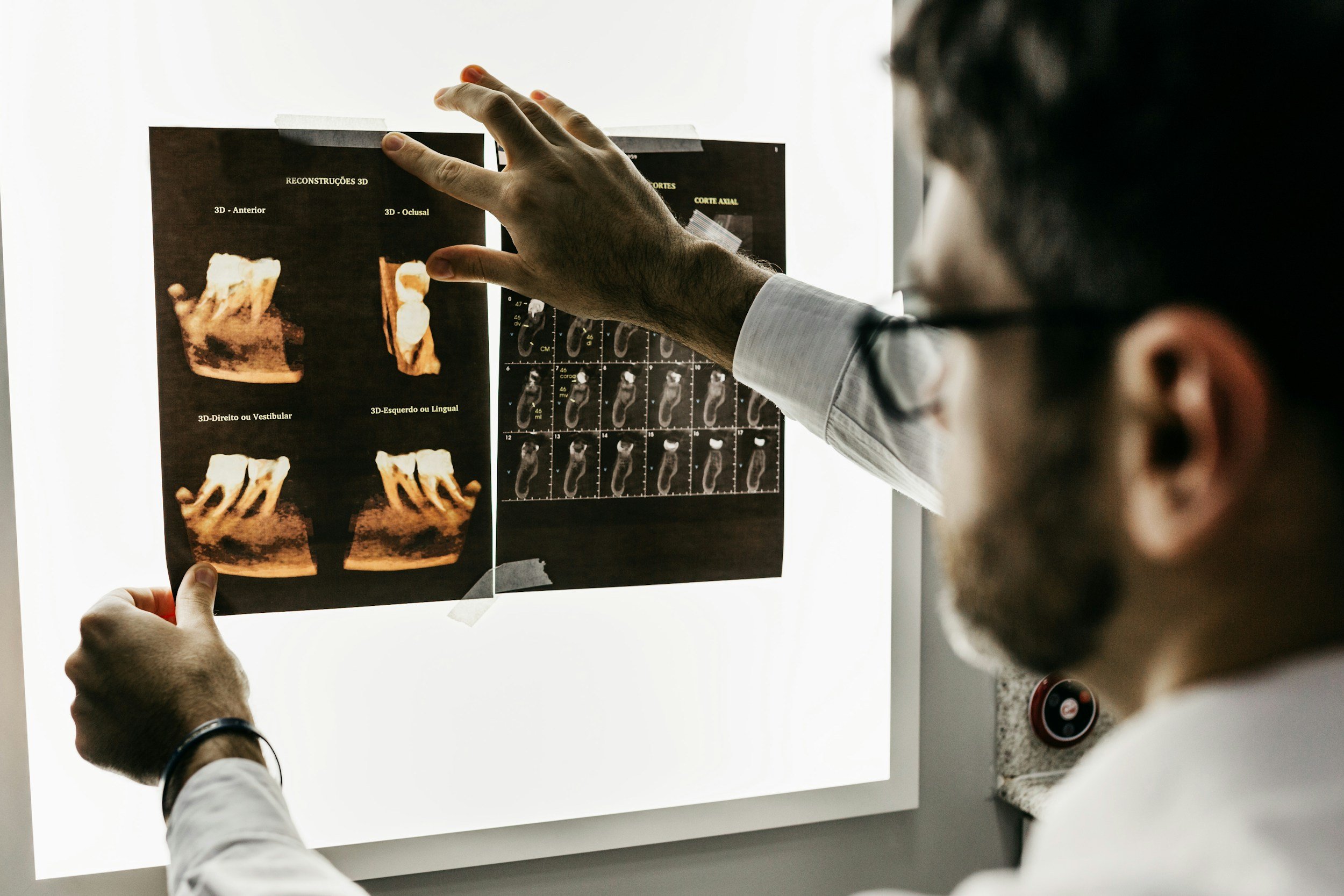
We assess your teeth, gums, bite, medical history, and expectations. We may need X-rays or 3D imaging to understand bone levels, neighbouring teeth, nerves, and sinuses.
This stage is where we decide whether an implant is appropriate, whether additional treatment is needed first, and whether there are better alternatives.
Step 2 - Implant placement
The implant is placed into the jawbone during a surgical procedure. Healthdirect notes that implant placement is a procedure that may involve local anaesthetic, sedation, or general anaesthetic depending on the situation and provider.
For many patients, the thought of surgery is more daunting than the reality. But it is still surgery, and it needs to be planned seriously.
Step 3 - Healing and integration
The implant needs time to integrate with the bone. The ADA explains that bone growing around the implant screw takes approximately three months.
Some cases take longer. Healing depends on the site, bone quality, general health, and whether grafting or other treatment was involved.
Step 4 - Restoring the implant
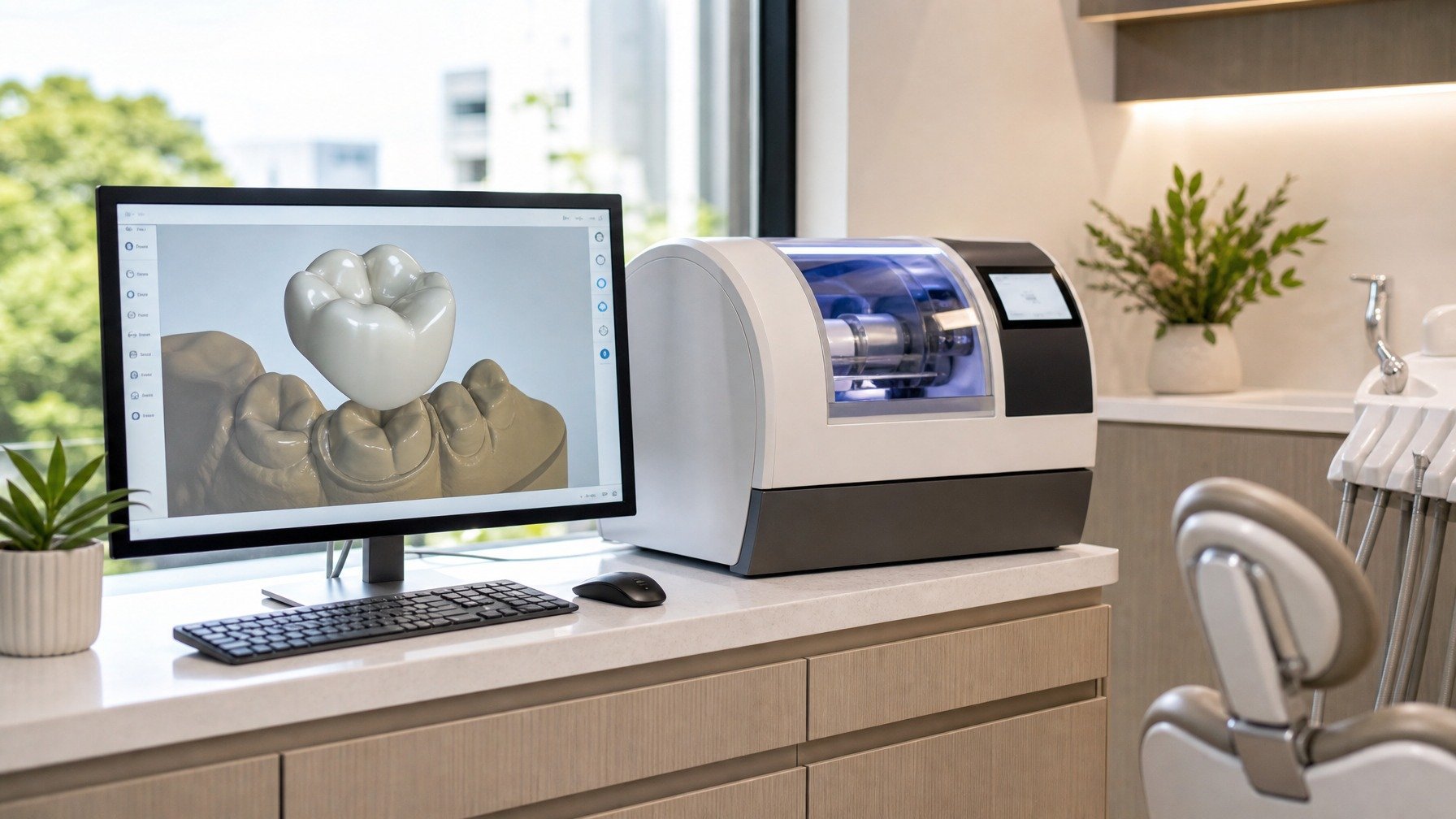
Once the implant is stable, the final tooth, bridge, or prosthesis can be made and fitted. This is where function and appearance are brought together.
The restoration needs to look natural, but it also needs to be cleansable and comfortable in the bite.
Step 5 - Maintenance
Implants need long-term care. The gum and bone around an implant can still become inflamed or infected if plaque builds up.
I always explain this clearly: implants do not decay, but the tissues around them can still become unhealthy. Maintenance is part of the treatment, not an optional extra.
Single dental implants
A single implant may be considered when one tooth is missing and the surrounding teeth are healthy.
The advantage is that we can often replace the missing tooth without preparing the adjacent teeth for a bridge. That can be a very conservative approach if the bone and gum conditions are suitable.
A single implant may suit you if:
One tooth is missing
The neighbouring teeth are healthy
There is enough bone support
You want a fixed replacement option
You are prepared for a staged treatment process
Implant-supported bridges
If several teeth are missing together, an implant-supported bridge may be considered. This means multiple missing teeth can sometimes be replaced using fewer implants than one implant for every tooth.
This can be useful when a patient is missing a group of teeth and wants something fixed rather than removable.
As always, suitability depends on bone support, bite forces, oral hygiene, and the number and position of missing teeth.
All-on-4 full-arch treatment
All-on-4 is a treatment concept for replacing a full arch of teeth using four implants. Nobel Biocare describes the All-on-4 concept as a full-arch approach using four implants, with immediate function possible when certain criteria are met, such as sufficient primary stability.
It is often discussed when many teeth in an arch are missing, failing, or being replaced. It may also be considered when a patient is struggling with conventional dentures.
The key point is this: All-on-4 is not simply “new teeth in a day” for everyone. It is a carefully planned surgical and restorative process. Some patients may receive provisional teeth on the day of surgery, but only when the clinical conditions are suitable.
Dental implants vs bridges vs dentures
There is no single best tooth replacement option for everyone.
A dental implant may be suitable when you want a fixed replacement and the bone, gums, bite, and health factors are favourable.
A bridge may be suitable when the neighbouring teeth already need crowns or when implant treatment is not preferred.
A denture may be suitable when a removable option is more practical, more affordable, or more appropriate for the mouth.
The right choice depends on:
How many teeth are missing
Where the missing teeth are
The health of neighbouring teeth
Bone and gum support
Budget
Medical history
Comfort expectations
Maintenance ability
I prefer patients to understand the trade-offs before deciding. That makes the decision calmer and more sensible.
Risks and limitations
Any surgical or invasive procedure carries risks. Healthdirect lists possible dental implant complications including infection, nerve damage, sinus problems, and injury or damage to surrounding teeth.
Those risks do not mean implants should be avoided. They mean the procedure needs proper assessment, planning, consent, and follow-up.
Risk can be influenced by:
Smoking or vaping
Gum disease
Diabetes or other health conditions
Medications
Poor oral hygiene
Bone quality
Bite forces
Lack of maintenance
This is why I do not like presenting implants as a simple product. They are a health treatment, and they need to be planned that way.
My approach to implant conversations
When a patient asks whether implants are right for them, I usually slow the conversation down.
I want to understand what they are hoping to achieve. Is the main issue chewing? Appearance? A loose denture? A missing front tooth? Embarrassment? Pain? Avoiding damage to other teeth?
Then I want to understand the mouth.
I look at the gums, the bite, the available space, the shape of the ridge, the neighbouring teeth, and the patient’s ability to clean the area.
Only after that does the implant discussion become meaningful.
For some patients, implants are an excellent option. For others, a bridge, denture, or staged treatment plan is more appropriate.
A note on realistic expectations
Dental implants can be very successful in the right situation, but no dental treatment should be presented as guaranteed. The Dental Board of Australia’s advertising guidelines are designed to help ensure health service advertising is accurate, honest, and not misleading.
That principle matters in the surgery as much as it does online.
Patients deserve clear information about benefits, limitations, risks, costs, timelines, and alternatives before making a decision.
What I would ask before choosing implant treatment
If you are considering dental implants, these are the questions I would encourage you to ask:
Am I suitable for implants?
Do I have enough bone?
Is my gum health stable?
What are my alternatives?
What are the risks in my case?
How many appointments are likely?
Will I need grafting or additional treatment?
Who is placing the implant?
Who is restoring the implant?
What maintenance will I need long-term?
Clear answers to those questions are usually a good sign.
When to consider an implant consultation
You may want to discuss dental implants if:
You are missing one or more teeth
You have a tooth that cannot be saved
You are unhappy with a removable denture
You are considering All-on-4
You want to compare implants with bridges or dentures
You want a long-term replacement option, but need honest guidance first
At Dentist In The Park, the aim is to help you understand your options without pressure.
Discuss Dental Implants in Bondi Junction
If you are considering dental implants in Bondi Junction, the next step is an assessment of your teeth, gums, bite, bone support, and medical history. I can talk you through single implants, implant-supported bridges, All-on-4, and alternatives such as bridges or dentures, then explain what may be suitable for your situation.
FAQs
Are dental implants right for everyone?
No. Dental implants can be an excellent option for suitable patients, but they are not right for every person. Suitability depends on gum health, bone support, bite forces, medical history, smoking status, oral hygiene, and expectations.
How long does a dental implant take from start to finish?
Many implant cases are completed over several months. The implant needs time to integrate with the jawbone before the final tooth is fitted. The ADA notes this bone integration process takes approximately three months, although some cases take longer.
Is dental implant surgery painful?
Implant placement is performed with appropriate anaesthesia, and many patients find recovery manageable. Some swelling, tenderness, or bruising can occur afterwards. Your clinician will explain what to expect based on your case.
What are the risks of dental implants?
Possible complications include infection, nerve damage, sinus problems, and injury or damage to surrounding teeth. These risks are part of the informed consent discussion before treatment.
What is All-on-4?
All-on-4 is a full-arch implant concept that uses four implants to support a full arch of replacement teeth. In suitable cases, provisional teeth may be fitted on the day of surgery if the clinical criteria are met.
Can I replace one missing tooth with an implant?
Yes, in suitable cases. A single implant can replace one missing tooth without relying on neighbouring teeth for support. Suitability depends on bone, gum health, spacing, bite, and overall dental condition.
Do dental implants need special cleaning?
Yes. Implants require daily cleaning and regular professional maintenance. Although implants do not decay like natural teeth, the gum and bone around them can still become inflamed or infected if plaque is not controlled.
What are the alternatives to dental implants?
Alternatives may include a conventional bridge, a partial denture, a full denture, or sometimes monitoring without immediate replacement. The right option depends on the number and position of missing teeth, oral health, budget, and personal preference.
Other helpful articles