Dental Hygiene and Gum Health in Bondi Junction - Cleans, Gum Disease and Prevention
A lot of dental treatment can be avoided. Not all of it, but more than most people expect. The single biggest factor is the day-to-day care of your teeth and gums, supported by regular professional cleans.
Gum health, in particular, tends to get overlooked. People focus on their teeth and forget that the gum and bone underneath are the foundation everything sits on. When that foundation is healthy, teeth are far more likely to last a lifetime.
At Dentist In The Park in Bondi Junction, our dental hygienist visits are about prevention rather than just a polish, and they sit alongside your regular general and family dentistry check-ups. This article explains what a professional clean involves, how to recognise the early signs of gum problems, and what genuinely helps at home.
Short answer: why do professional cleans matter?
Brushing and cleaning between your teeth removes most plaque, but not all of it. Over time, the plaque that is missed hardens into calculus, often called tartar, which cannot be removed by brushing alone. A professional clean removes that build-up, particularly along the gum line, which helps prevent gum disease and lets us catch small problems early. For most people a regular hygiene visit alongside daily home care is the most effective thing they can do for long-term oral health.
What plaque does to teeth and gums
Plaque is a soft, sticky film of bacteria that forms on teeth every day. Better Health Channel describes how plaque that is not removed can lead to both tooth decay and gum disease, because the bacteria produce acids and irritate the gums.
When plaque sits along the gum line, the gums respond with inflammation. In the early stage this is called gingivitis, where the gums become red, puffy and bleed easily. The important thing about gingivitis is that it is usually reversible with good cleaning and a professional clean.
If it is left, inflammation can progress to periodontitis, a more serious gum disease that affects the bone supporting the teeth. The Australian Dental Association notes that periodontitis is a leading cause of tooth loss in adults. The damage at this stage is harder to reverse, which is exactly why prevention and early treatment matter so much.
Signs your gums may need attention
Gum disease is often painless in its early stages, which is part of why it is missed. It is worth booking a check if you notice:
Gums that bleed when you brush or clean between your teeth
Red, swollen or tender gums
Persistent bad breath or a bad taste
Gums that look like they are shrinking back from the teeth
Teeth that feel loose or have moved
A change in how your teeth fit together when you bite
Bleeding gums are common, but they are not normal, and they are usually a sign that the gums need attention rather than something to ignore. The earlier this is looked at, the simpler it generally is to manage.
What a hygiene visit involves
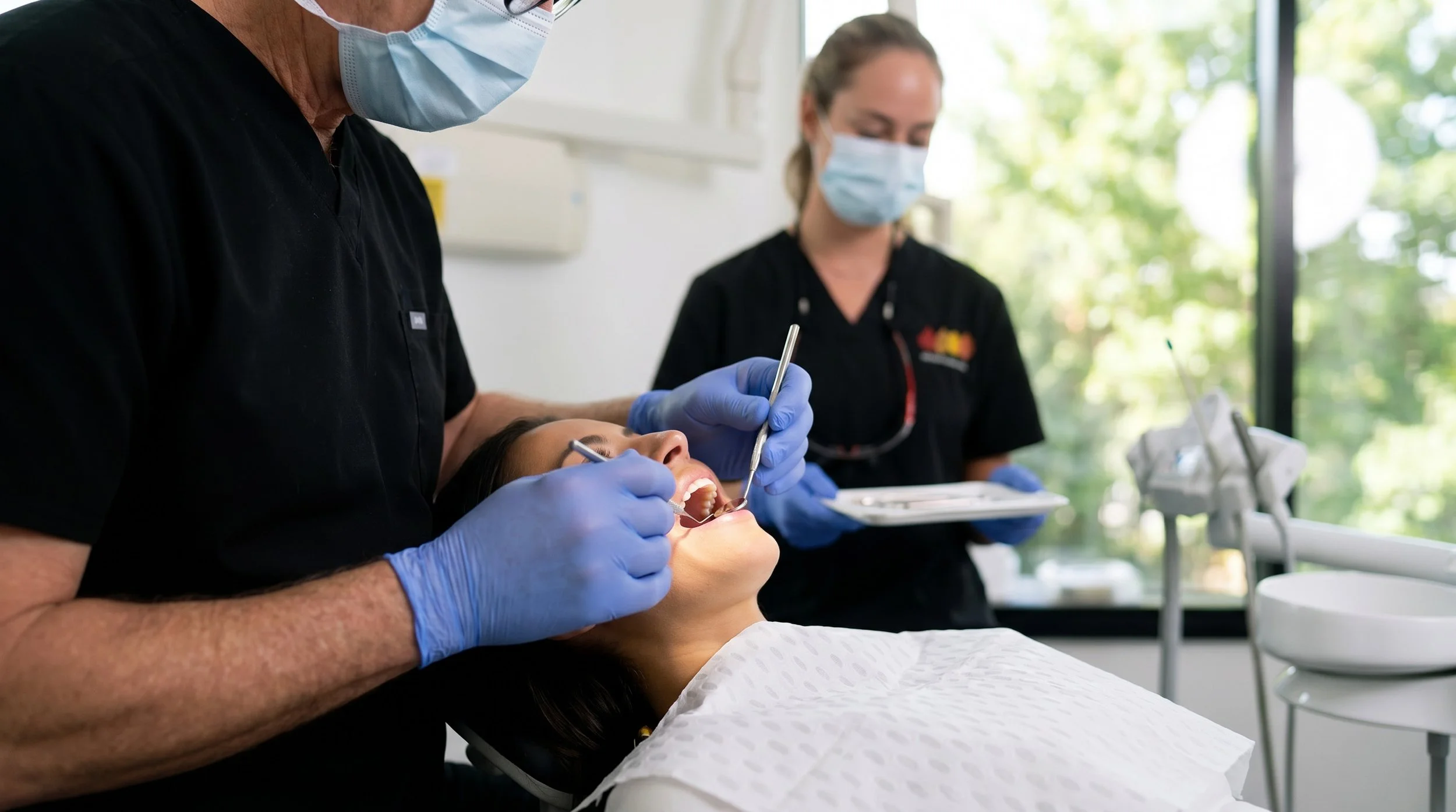
A professional hygiene visit is more than a polish. A typical appointment includes:
A check of your gums, often including measuring the small spaces around the teeth to assess gum health
Removal of plaque and hardened calculus from the teeth and along the gum line, including areas that are hard to reach at home
A polish to remove surface staining
Practical, personalised advice on cleaning technique and any areas you are missing
For most people this is comfortable. If there is more build-up or some gum inflammation, the gums can feel a little tender during or after, which settles. Where gum disease is more advanced, a deeper cleaning treatment over one or more visits may be recommended, and we explain that clearly before starting.
How often should you have a clean?
The honest answer is that it depends on you. Many people do well with a hygiene visit and check-up around every six months, while some need more frequent visits and others can safely stretch them a little. The right interval depends on your gum health, how much build-up you tend to form, and your risk factors.
Rather than apply a blanket rule, we set an interval that suits your mouth and review it over time. That is the point of a tailored preventive approach.
Looking after your gums at home
Professional cleans support good home care, but they do not replace it. What happens every day matters most. The fundamentals are simple and supported by the ADA's oral health advice:
Brush twice a day with a fluoride toothpaste, including gently along the gum line
Clean between your teeth daily with floss or interdental brushes, because brushing alone misses the surfaces between teeth where gum problems often start
Eat a balanced diet and limit frequent sugary snacks and drinks
If you smoke, know that it significantly increases the risk of gum disease, and reducing or quitting helps
Keep up regular check-ups and hygiene visits so problems are caught early
Cleaning between your teeth is the step most often skipped, and it is one of the most valuable. If you find floss awkward, interdental brushes or other aids can make it much easier, and we are happy to show you what works for your mouth.
Gum health and the rest of your body
Gum health is not only about your mouth. There is a well-recognised link between gum disease and several general health conditions. Better Health Channel notes associations between periodontitis and conditions such as diabetes and heart disease. The relationship is complex and still being studied, but it is a good reason to take bleeding gums seriously rather than dismiss them.
My approach to hygiene and gum health
I see prevention as the most underrated part of dentistry. It is far easier, more comfortable and less costly to keep a mouth healthy than to repair one.
My approach is to treat the hygiene visit as a partnership. Our job is to remove what you cannot remove at home, to spot early problems, and to coach you on the small daily habits that make the biggest difference. Your job is the day-to-day care. When both happen, most people can avoid a lot of bigger treatment down the track.
And if there is already some gum disease, I would rather we find it early and deal with it calmly than wait until teeth are at risk. Healthy gums are quietly doing their job in the background, and they are well worth protecting.
Request a Hygiene Assessment in Bondi Junction
If your gums bleed, you have not had a clean in a while, or you simply want to keep your teeth healthy for the long term, a hygiene visit and gum check is a good place to start. I can assess your gum health, remove any build-up, and tailor a prevention plan to your mouth.
FAQs
Is bleeding when I brush normal?
Bleeding gums are common but not normal. They are usually a sign of gum inflammation that needs attention. In the early stage this is often reversible with improved cleaning and a professional clean.
How often should I see a hygienist?
Many people do well with a visit around every six months, but the right interval depends on your gum health and how much build-up you form. We tailor it to your mouth rather than applying a fixed rule.
Does a professional clean hurt?
For most people a clean is comfortable. If there is more build-up or some gum inflammation, the gums can feel tender during or after, which settles. We can discuss comfort options if you are nervous.
Can gum disease be reversed?
Early gum disease, gingivitis, is usually reversible with good cleaning and professional care. More advanced gum disease, periodontitis, can be managed and stabilised but the lost support is harder to reverse, so early treatment matters.
Why do I need to floss if I brush twice a day?
Brushing cleans the broad surfaces of teeth but misses the areas between them, where decay and gum problems often start. Cleaning between your teeth daily reaches those surfaces, which is why it is recommended alongside brushing.
Will a clean remove staining?
A hygiene visit removes surface staining and polishes the teeth, which can leave them looking brighter. Staining within the tooth is a different issue and may be discussed as a separate cosmetic option such as whitening.
Is gum disease linked to other health problems?
There is a recognised association between gum disease and conditions such as diabetes and heart disease. The link is complex and still being studied, but it is a good reason to take gum health seriously.
Which areas does Dentist In The Park service?
We care for patients across Bondi Junction and the Eastern Suburbs of Sydney, including Bondi, Bondi Beach, Waverley, Woollahra, Double Bay, Rose Bay and Vaucluse.
Other helpful articles